Showing posts with label recovery. Show all posts

Thursday, March 21, 2019

Training for the Wafer Ride...one mile at a time

TOP OF DOUBLE PEAK WITH WHITE CAPPED BIG BEAR IN THE BACKGROUND


Training for the Wafer Ride

Every Spring, bikers coming out like butterflies in migration and start riding their bikes - on the road, trails, and more and more are hitting the gravel.  Gravel riding has gained a lot of momentum with rides and events growing year after year.  The most notorious in San Diego County is the Belgian Waffle Ride (better known as the BWR) the first weekend of May.  Chances are that you have heard of this race - for it's insane distance, multi terrain challenge and that most riders are doing this on skinny tires! I remember the first time I saw the race, I thought to myself.. "why would ANYONE want to do this?!"

Not sure if I started to follow the BWR or it has followed me, but in the last three years the spheres of influence have been getting stronger.  And here I am training 5 riders to complete the Wafer (Waffle's little sister) as complete BWR virgins.  The 5 riders come from various backgrounds, various skills, and various fitness levels.  The roadie has endurance, the mountain biker has skills, and together they averaged 3 hours a week on the bike.

So how does one train for the Wafer Ride when you have been putting in maybe 1-2 rides a week?

We began training January 7th, and in the 10 weeks we have been training, here are the top 5 training strategies that have helped these five gentlemen get stronger, faster, and ride longer:


1.Mindset 

You need to start with the commitment that you CAN do the 68 mile ride and that you WILL do the training.  There is no option in your mind that if you can.  Training happens one mile at a time, one hour at a time, and an accumulation of hours on the bike and type of hours.  The Wafer team know the goal for each week and each month.  Most importantly - keep it consistent.  Each ride counts.  Each workout counts.


2. Endurance Miles

To complete the Wafer, 68 miles and 6500 feet of climbing, will take on average 6-8 hours...6 to 8 HARD hours.  It's important to know your pace, to work with other riders to draft, and attention to nutrition and hydration are of upmost importance.   The group started with a 2 hour ride, that moved into 3-4 hour ride, and we recently completed a 5 hour ride.  


3. Skills 


Turning and braking on gravel and dirt is very different than when on a road.  We have had the privilege of working with Brian McCulloch (last year's winner of the Waffle) with Big Wheel Coaching on switchbacks, gravel turning, and navigating through rock gardens.  We have skill days every other week to improve bike handling, choosing lines (which is a new concept for roadies), navigating rock gardens and ruts, and fine tuning our brake and turning.  Have good skills keeps you and other riders safe, makes you more efficient, and gives you the ability to enjoy the ride a litter more.  


4. Strength

You need strength to get up long hills, steep hills, and long steep hills such as the Questhaven Double-Peak climb on the final miles of the ride.  We incorporate strength training (ideally twice a week) and have strength days on the bike.  Bike strength includes long sustained climbs, my favorite over, unders (1 min zone 4, 5 min zone 2) repeats, as well as power efforts.  Bike strength is incorporated once a week or every other week.  These are tough days and should be done on rested legs and not before a long ride.


5. Recovery Days

I take recovery days very seriously.  These are not optional rides but time on the bike to spin the legs and get fresh blood to tired muscles.  These are hard earned days and should be respected as such.  These days give your body time to recover and recoup from previous lashings and allow preparation for what's to come.   Get on the 101 and just cruise... 

There are several other factors that will need to be addressed to be successful, like the type of bike you are riding, what you are eating during the week, sleep, stress, etc.  But without the first five, your ride will be compromised.


These five gentlemen are now averaging 7-8 hours a week and the next phase includes focusing on strength and incorporating commuting to increase weekly mileage.  Six weeks to go and counting...

Train hard, train smart.
Chi

Thursday, December 15, 2016

Mountain Bike Training Workshop - January 13, 2017

Mountain Bike Training Workshop - 
Train hard to ride fast

Date: Friday, January 13, 2017 from 6-8 pm

Locaton: somewhere in north county, San Diego.

Cost per person: $25

SIGN UP HERE

you love to ride and you spend lots of time and money on your bike.  But how do you train yourself?  Mountain biking is a demanding sport including endurance, power, balance, agility, skills.  Not to mention the proper nutrition and hydration to sustain a 2, 4, 8 hour bike ride!  And there's more.. strength training, staying limber, injury prevention..

Includes:
1. Elements of a fitness as it relates to mountain biking.
2. Importance of a training program.
3. Why you should include recovery and rest into your training.
4. Strength training makes your faster
5. Take care of your body - stretching, yoga, body work.
6. What to eat before you ride, after you ride, and nutrition for your rides to keep you going strong
7  Healthy snacks and one beer ticket.

Sign up here .  Be sure to tell your buddies! 
Once you sign up, i will be in touch with more details.  Happy holidays! 

Train hard, train smart

chi

Thursday, June 2, 2016

The coveted rest week - rest to get faster and stronger

Ahhhh..i made it - time to rest.  For the whole week, i don't have to think about miles, minutes, pace, or anything related to training.  This week is about recouping, recharging, and like my acupuncturist says, restore my chi :)

Taking a much need rest after the Catalina Gran Fondo.

Intense training and racing takes its toll.
  • The physical & mental energy required for race day performance and focused intensity.  
  • Physical energy for those hard training days that you push yourself past your limits.  
  • Time and energy to plan your rides and training off your bike.  And then the energy to take care of life's necessities like cleaning, cooking, kids, or life's emergencies after a hard ride. 
  • Physical & mental energy to start a ride or workout when your body feels exhausted from yesterday's activities.  
  • And the emotional energy.  Maybe it's because i'm a girl and i can be more sensitive then my male counterparts, but i know that when I've been putting my body under continuous stress, i am not able to handle emotional situations as gracefully.  
Honestly i would make myself push through all this stuff and keep going.  The real reason why I started to incorporate rest week was due to the fact that I would get sick...all the time. Mostly upper respiratory infections - in two years i got pneumonia twice!!  After the second bout of pneumonia, I threw the towel in to figure out what was going on.

As a coach, i should know better than to not give my body rest.  But as an athlete, it is hard to stop training.  i had to come to terms with the science and give myself the needed rest WEEK.  It's been about a year and a half since i started to incorporate the coveted rest week and i've been sick only once in that time. 

How it works - train, intense hard for 5-7 weeks (varies from athlete to the next) and then take a WHOLE week to do whatever the heck I want.  here are a few do's and don'ts for your rest week:

  • DON'T put too many rules.  do whatever you want without any judgement.
  • DO schedule a massage or acupuncture or some type of bodywork to help with muscle and tissue rejuvenation.  I try to do more yoga during my rest weeks.
  • DO try to get fresh air and get a little sweat. Do something you don't normally have time for.
  • DO try to do more with the ones you love - Sit and watch movies with my children.
  • DON'T worry that your friends are riding or the such.
Then when it's time to get back on the bike and start training, you will be able to give more then you did before your rest week.  It's in the science - train hard (overload principle) and then recovery to rejuvenate and repair.   I've also noticed that I'm don't get burn out like i have in the past.

Tomorrow?  Time to go to Big Bear for some racing..yea!!!  Rest week is about to end and i'm like a race horse hungry to ride fast.

Train hard, rest even harder
chi

here are few articles reinforcing how your performance improves when you incorporate a rest week. 


Wednesday, March 18, 2015

knowing when to rest...and how to rest

sometimes it feels like my head just spins..so much in life that is totally out of my control and then so many things that i want to do and i get excited for.  between the two i get squashed into an ADD firework show.

the few times that i actually stop thinking is when i'm riding.  everything is totally quiet.  sometimes i hear my own thoughts but they are not screaming out at me or coming 2-3 at a time.  they are like soft whispers of happy thoughts.

but what happens when the body is tired and you can't ride (run, swim)?  take a rest day..rest week.

over the last six months i've been sick twice...and each time i was sick were chest/lung related where the thought of doing a ride was out of the question.  (and i'm still sick as i'm writing this with a gurgle cough, swollen lymph nodes, and general malaise).  i think back at what lead to each of those illnesses and noticed that i was putting in serious time and energy without adequate rest.  not just a day rest, but a mental and physical rest week.  a week to pull back and let my body properly recover.   just have fun and do whatever i wanted and play.   what a concept.  i know this basic principal as a trainer, but as an athlete i'm a stubborn bull unable to give up my training, my riding.  my riding gives my brain a chance to breath and let the stress go.  unfortunately, by letting one stress go, i take on another that is wearing my body down.

the body is an amazing work of art.  it works constantly to find equilibrium - you train hard and the body adapts to the stress, you stop exercising and the body adapts.  my body isn't just dealing with my stress of my 9-5 job and mountain biking but the stress of raising 3 girls, taking care of finances and a home, and not to mention the challenges of a teenager.  oh yes, and having a relationship.  my body is under so much stress that i don't know how to relax if i'm not riding.  a friend mentioned to me today (impeccable timing), he said 'resting isn't just sitting and relaxing, it's relaxing in here' and he points to his head.

i took a day off today.  i was suppose to be on my weekly wednesday night ride with class A riders but instead i listened to my body and rested.  i'm still working on resting...in my mind.

peace out..
chi

Monday, August 19, 2013

5 ways to stay young...while still getting those achievements

If you are like my friends, you are constantly testing your strength, endurance, and skills. With the new Strava tool, it is even easier and quicker to see your improvements.  Those PRs, crowns, and trophies feel good; immediate gratification.  But repetitive days of intense exercise can have a toll on your body.

Recently at work, an avid beach volleyball player came into my office to ask information about why his body was starting to hurt and what he could do.  He was in his late 30's and was worried he getting old.  He wanted to keep playing volleyball but wasn't sure if he was wearing down his body.  The grim look on his face was a complicated balance of keeping your body feeling young and healthy while still enjoying your favorite sport and reaching/pushing your goals.
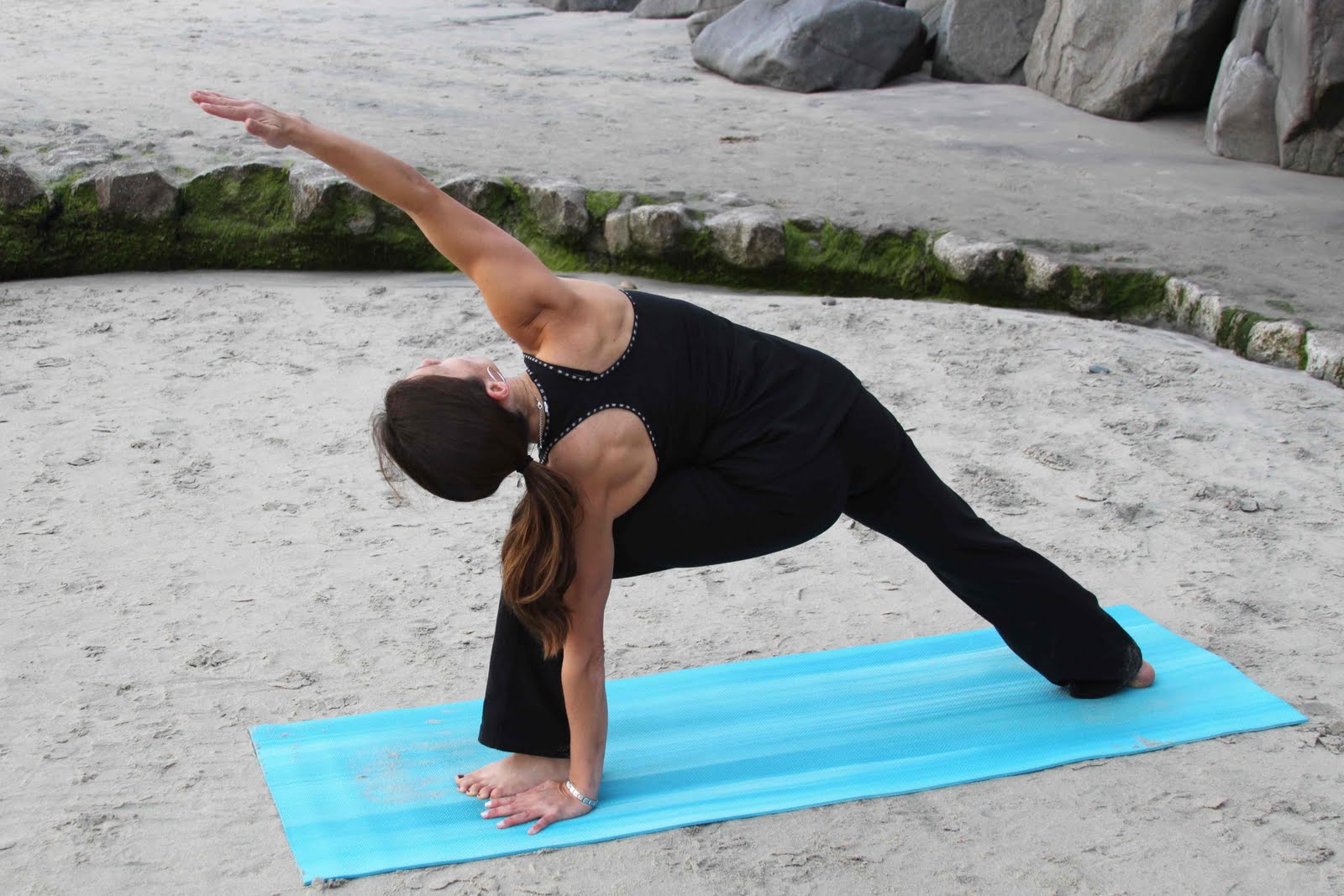
Prasarita Padottanasana D - 
I love this stretch - it opens my hamstrings, inner thighs, calves, and stretches my lower back.

5 simple ways to keeping your body feeling young:
1. REST  - be sure to give your body a break 1-2 days per week.  After an extreme & intense event, you may have to take days or weeks off.

2. NUTRITION - performance is 100% training and 100% diet.  When the body is under extreme stress, it is possible to weaken the digestive organs decreasing the amount of nutrients it can absorb. You may need to take a supplement.  Also, notice how much protein and fat you are eating and the macro-nutrients in your diet.   Taking fish oil or Omega can help reduce inflammation in the joints.  Your nutrition is your medicine.

3. BODY WORK  - have a trusted massage therapist, acupuncturist, and/or chiropractor that can keep your body tuned up like a machine.  Runners and riders will often have tight hips and hamstrings while swimmers and surfers will have tight shoulders and back muscles.    

4. WARM-UP - Take time to stretch and warm-up.  A proper warm up properly can help with performance and studies have shown that a proper warm up can also decrease DOMS (delayed onset of muscle soreness).  Integrate a yoga practice into your routine.  

5.  CROSS TRAIN  - complement your passion with variety.  Try biking, running, swimming, tennis.  Constant repetitive movement can wear down joints making you more susceptible to injury.   Strength training and core work is a great foundation for any sport.

Off to yoga for some recouping after an intense mountain bike ride yesterday.

Stay young :)
Chi

Saturday, December 29, 2012

Client of 2012! A snowboarder gets his Christmas wish

As a trainer, i have the privilege of working with goals and dreams.  I analyze discrepancies, muscle imbalances, core weakness, and commitment.  Achieving your dreams requires all...commitment, strength  and humility.

This year, I crown Mark as the client of the 2012...here's his story and what he has overcome..

Mark is an educated and accomplished financial director working for a Fortune 100 company.  He works long days and nights.  He also has a wife and 2 children and is able to stay connected to his family's daily activities and events.  He spends quality time with his family and extended family and has taken time to help his elderly mother.

Aside from his responsibility to his family and work, he is equally passionate about his health, fitness, and strength.  and THAT is the key, the essence of his success.   He wants to stay, feel, and be strong.  He can bench his weight and pull his weight.  Over the summer, his aching hip which was a nuiance, turned into a sharp pain in the middle of the night. and in September, Mark (after long thoughtful discussion and deliberation) had his hip replaced.  The only thing he was worried about was snowboarding in the Winter...

He came back to train in October, just 4 weeks after his surgery with hopes to snowboard after Christmas.  we had a lot of work to do...

Oct 15-30 - work on core strength, hip strength, and balance; increase hip range of motion (ROM)
sample: one-legged exercises.  bridge/chest exercises with a stability ball (SB) to challenge core, gluts and hip strength.  side leg lifts with band.  squat with limited resistance.  high intensity - battle rope, bench, pullups.  

Nov 1-15 - increase resistance on hip motion, core and balance.
sample: squats on bosu with balancing movements (e.g. twists), plank exercises on SB, TRX reverse lunges to balance.   RIP Trainer - straight arm twists.  MORE high intensity - battle rope, bench, pullups.  

Nov 15-dec 15 - bring it on!!!  high intensity, limited recovery.  Fatigue legs and hips.
sample: heavy squats with heel raises for 45 sec followed by turning squat jumps followed by SB plank & SB pike, TRX plank, Bosu obliques crunches.    also included upper body exercises.

On Dec 20th, Mark saw his doctor who gave him the green light to snowboard. :)

I'm happy to report that Mark is currently in Mammoth, snowboarding on a new hip.  When I asked how he felt..he said

" You could not have got me more prepared.  Was an awesome day with awesome conditions.  My leg has held up way better than expected.  Can't wait for tomorrow"

Mark - I'm so proud of you and your commitment.  and for all those Mark's out there..stay strong and focused!

Train hard, Train smart
A very happy trainer

Tuesday, July 19, 2011

Will Race For Beer

Racing has a unique way of defining you as an athlete and as a person. I wasn't always sucha strong competitor but after completing my first mountain bike racing season as Expert, I look back at how much racing has molded me into the athlete and person I want to become. It is an arena to become a better rider – nimble and light on the descents, strong and steady on the climbs, and smart on the nutrition. I won’t race forever: one day I will fill my calendar with my own picks & favorite trails rather than US Cup # (enter a number); but while the fire is burning and the passion is there, I will race and race hard.


Be careful with overtraining!
I was getting faster with every ride; so I rode more, hoping to get faster. Only to find that I was sick and my energy was severely dampened. Manage your energy and stop while you’re ahead. You know you’re overtraining when you ride and your legs hurt after your warm-up. They should feel fresh and your breathing smooth.


Ditch the camelback!
The camelback was like my blankie and it had everything I thought I needed. But when it came to racing, it's about being lite. What I REALLY needed on a 15-25 mile ride was a tube, CO2, a gu and a bottle of water. The only other time I used my camelback was during Downieville when I needed both hands on the bars during the descents. Although, there were a few moments I could have drank from a bottle…note taken for next year.


Stay focused!
There were obstacles that could have slowed me down or made me think I couldn’t ride hard. There are obstacles IN LIFE that make you question your ideas, your abilities, and your values. Believe in yourself. Staying focused on the task (call it a race, a goal, your life) is challenging because distractions and doubt can steal your vision. Nuture your goals and recommit your focus -- this focus is powerful. Whether it is a break up, worse day of my period, and an upset stomach (all on the same day), you still have to race. What are you going to do about it? What does it take to break you? Excuses give you an easy out; but challenges can make you find a stronger side that is waiting to be exposed. Once the race starts and you got your groove, fatigue seeps into your muscles and your head and start a downward spiral. Keep your focus! Breathe… when you can hone your focus, you transport to a kind of surreal, dream-like feeling. When I race, I tell myself “Winners don’t whine” or “soon you’ll be sitting with a cold beer and won’t feel any of the pain” . When all else fails, PEDAL, PEDAL, PEDAL!


What’s a kit?!
Team leader, Derek Harmon, brought me a kit the day before the first race at Sagebrush. I’m thinking “what the heck is a kit?”. Soon I realized that your racing outfit is your kit - dah! I was reluctant to wear the tight shorts (XS? REALLY?!) but after racing in ‘my kit’ I realized that they do the job of keeping clothing out of your way. I acquired a new Lazer helmet that is feather-weight and super cool glasses that have changeable lenses.


The power of protein, electrolytes, and water!
How, when, and what you feed yourself 24/7 is essential to training and racing. The closer you pay attention to your hydration, protein, and veggies, the more power you get. I added a shake in the morning that has 20 grams of protein and shit-load of fruit, added some lean steak on my salad, ate more fish, took omega-3 oils, added super green powder to my drinks/smoothies. Alcohol intake subsided and was substituted for water. Stopped my Wednesday night ice cream treats and substituted plain greek yogurt with fresh fruit. Started using
Hammer’s Recoverlite after my hard rides. On average, I drank 4 liters of water a day. I ate and drank to ride and then I ate and drank to recover.


Train hard, train smart!
Every workout, no matter how good or bad I might have felt, was like a deposit into the ‘race hard fund’. But on those rides where I was committed to the training, I made huge gains. I started to tailor my workouts depending on the race coming up – short and fast, long hills, technical descents. I added more pushups and pull-ups for Downieville and long hill repeats for Big Bear race. Ahhh…and then there’s yoga like a dear, loyal friend. My yoga practice has improved my upper body and core strength with arm balancing poses. Yoga is about non-attachment and not worrying about how good you look, it’s about your breath and how you feel and being absolutely present. My mind would wander and I would bring it back to the present. This training, helped me keep my focus during my riding….one breath at a time.


Next year...
more strength training – core for balance and strength, stronger legs for the climbs, stronger upper body for the descents. Adding road biking to the training schedule in the off-season. My own floor pump – hand pump and CO2s aren’t cutting it. Finally, arm and leg warmers would be nice.


I must give proper credit to – Derek of Bear Valley Bikes who helped me ditch the camelback, reassured me before major races, helped me with the fancy helmet and gear, and with race day logistics. My riding buddies (Craig & Binh - pictured left) for showing me the lines and keeping it real. My buddies (Orange & Gimpy) at work for kicking my ass. Super K for reinforcing all that I read about mental training and how key it is to having a successful race. My family who made sure I came home safe after every race.


Every time I get on my bike, it is a treat. I get a unique opportunity to encounter the world around me in a language I understand. It cures my concerns, shows me solutions, retraces the beautiful gifts I have in life, and makes me feel so grateful. At the end of the day, a race is a race; take the good and the bad and learn. Have fun along the way.


Now...how about that cold beer?

Chi

Tuesday, April 12, 2011

Eat your Wheaties...nutrition and performance

After an extreme weekend of riding or racing, I like to see all the data from my fancy Polar watch and check out how many calories I used up. During a 2-3 hour ride, I can easily burn 1000-2000 calories (the equivalent of a large meal at In-and-Out). And this is on top of the 1500+ calories I SHOULD be eating. I'm not a big person, many of you probably burn 50-100% more than that!! But we extreme athletes & adventureous souls can be a bit lazy about our calories...often not taking enough calories in; and when we do, we don't always put the right things in our bodies. We reach for that super drink, super bar, or super-sized (enter your guilty pleasure here).

According to Sara Grout, nutritionist who specializes in functional nutrition and metabolic typing, an athlete's nutritional requirements are critical not only to their performance but also in their longevity and to the prevention of burnout and injury. The body is constantly under stress -- and if it isn't receiving proper nutrients, the body starts to leach them from its stores. The chance of burnout and injury increase (some joint problems could be related to poor nutrition) while your performance suffers (legs feel tired, not enough power, reoccuring illness). This is the most interesting information that Sara shared in a recent interview about nutrition and performance of the endurance/extreme athlete: the constant stress from exercise itself and the recovery process can cause the digestive lining to weaken. This makes it hard for the body to properly use the food and absorb the nutrients. Result - you might be eating the right foods but still lacking nutrients.


Checklist for your frig & pantry - Take a look at your diet. The right formula on what you should eat is as individual as your training. Each person requires an optimal palette of foods based on unique physical demands. In light of keeping a complicated topic simple, this checklist will help guide you to fine tune your current habits and help you stay in the game.


  • PROTEIN and FATS are your best friends! include both of these in every meal and snack. especially when it comes to fats, athletes need good fats. low fat is not better.


  • JUST SAY NO TO BARS... instead reach for whole foods for your pre-workout and post-workout meal. examples include: banana, homemade protein bars with nuts and honey, baked sweet potato.


  • RAW Vs. COOKED veggies - raw isn't always better. the body is able to absorb nutrients better from cooked veggies


  • SEA SALT- it is the major electrolyte that will help with fatigue and balances the other electrolytes. If cramping is any issue, Sara recommends magnesium/calcium but be sure that you are well hydrated and getting enough sea salt. note that i didn't just write salt; sea salt has the compounds most similar to those you lose in your sweat.


  • HUNGRY? eat more fat and protein

Enjoy your meal...you earn it! Chi

Tuesday, June 22, 2010

simple cures for sore muscles

Summer brings on a blend of strenuous activities that can leave the body cringing, craving for massages, and food. On a recent weekend of a 3-hour hike followed by two mountain bike rides, my ass, thighs, and even my knees (no past history on knee pain), were sore to the touch and everything was tight. For many others who have this morning surprise, here are some proven tips to decrease soreness.

1. keep moving. swimming and lite jog are great but even a ride or walk work. keep it easy and just aim on getting the blood flowing.
2. massage - if you know you are going to be sore (e.g. just did a race), an immediate massage works like magic.
3. drink water and then drink more water. drink until you pee clear.
4. the homeopath, arnica works to decrease muscular aches. you can take it in its pellet form or rub a cream directly to area
5. take an epsom salt bath for 15 minutes.

try to do 1-2 of the suggested items above and you will notice a faster recovery and decrease in soreness.

train hard, train smart.