Showing posts with label nutrition. Show all posts

Thursday, March 21, 2019

Training for the Wafer Ride...one mile at a time

TOP OF DOUBLE PEAK WITH WHITE CAPPED BIG BEAR IN THE BACKGROUND


Training for the Wafer Ride

Every Spring, bikers coming out like butterflies in migration and start riding their bikes - on the road, trails, and more and more are hitting the gravel.  Gravel riding has gained a lot of momentum with rides and events growing year after year.  The most notorious in San Diego County is the Belgian Waffle Ride (better known as the BWR) the first weekend of May.  Chances are that you have heard of this race - for it's insane distance, multi terrain challenge and that most riders are doing this on skinny tires! I remember the first time I saw the race, I thought to myself.. "why would ANYONE want to do this?!"

Not sure if I started to follow the BWR or it has followed me, but in the last three years the spheres of influence have been getting stronger.  And here I am training 5 riders to complete the Wafer (Waffle's little sister) as complete BWR virgins.  The 5 riders come from various backgrounds, various skills, and various fitness levels.  The roadie has endurance, the mountain biker has skills, and together they averaged 3 hours a week on the bike.

So how does one train for the Wafer Ride when you have been putting in maybe 1-2 rides a week?

We began training January 7th, and in the 10 weeks we have been training, here are the top 5 training strategies that have helped these five gentlemen get stronger, faster, and ride longer:


1.Mindset 

You need to start with the commitment that you CAN do the 68 mile ride and that you WILL do the training.  There is no option in your mind that if you can.  Training happens one mile at a time, one hour at a time, and an accumulation of hours on the bike and type of hours.  The Wafer team know the goal for each week and each month.  Most importantly - keep it consistent.  Each ride counts.  Each workout counts.


2. Endurance Miles

To complete the Wafer, 68 miles and 6500 feet of climbing, will take on average 6-8 hours...6 to 8 HARD hours.  It's important to know your pace, to work with other riders to draft, and attention to nutrition and hydration are of upmost importance.   The group started with a 2 hour ride, that moved into 3-4 hour ride, and we recently completed a 5 hour ride.  


3. Skills 


Turning and braking on gravel and dirt is very different than when on a road.  We have had the privilege of working with Brian McCulloch (last year's winner of the Waffle) with Big Wheel Coaching on switchbacks, gravel turning, and navigating through rock gardens.  We have skill days every other week to improve bike handling, choosing lines (which is a new concept for roadies), navigating rock gardens and ruts, and fine tuning our brake and turning.  Have good skills keeps you and other riders safe, makes you more efficient, and gives you the ability to enjoy the ride a litter more.  


4. Strength

You need strength to get up long hills, steep hills, and long steep hills such as the Questhaven Double-Peak climb on the final miles of the ride.  We incorporate strength training (ideally twice a week) and have strength days on the bike.  Bike strength includes long sustained climbs, my favorite over, unders (1 min zone 4, 5 min zone 2) repeats, as well as power efforts.  Bike strength is incorporated once a week or every other week.  These are tough days and should be done on rested legs and not before a long ride.


5. Recovery Days

I take recovery days very seriously.  These are not optional rides but time on the bike to spin the legs and get fresh blood to tired muscles.  These are hard earned days and should be respected as such.  These days give your body time to recover and recoup from previous lashings and allow preparation for what's to come.   Get on the 101 and just cruise... 

There are several other factors that will need to be addressed to be successful, like the type of bike you are riding, what you are eating during the week, sleep, stress, etc.  But without the first five, your ride will be compromised.


These five gentlemen are now averaging 7-8 hours a week and the next phase includes focusing on strength and incorporating commuting to increase weekly mileage.  Six weeks to go and counting...

Train hard, train smart.
Chi

Sunday, May 7, 2017

Climbing Whitney in a Day - Gather your gear (the bare bones)

(small excerpt from upcoming "Climbing Whitney in a Day" book)

Climbing Mt Whitney in one day is a lot to ask of your body.  It is 22 miles long (11 up, 11 down); you summit at an altitude of 14,505 feet, and your vertical climb is over 7000 feet! That morning, you’ll wake up before humanly appropriate (approximately 3am).  You barely consume the calories you are burning.  You may get uncomfortably cold, you may get severe altitude sickness, and several other unfortunate situations may arise.   The goal of your training program is to get your body properly prepared, get your gear lined up, and give you confidence to be successful and safe. 

Your gear includes must haves, should have, and nice to have.  Here is a list of Bare Bones items you must have to be safe and successful.

Bare Bones – Must Have

1. A pack to carry your stuff – 18-22 liters in size is good – that’s about the size of a pillowcase.  If you go bigger than you will be tempted to fill it up.  Your goal is to bring all the stuff you need while being as light as possible. Your pack with water and gear should weigh about 20-22 lbs (25 lbs tops). 
Cost: $75-100 for a day pack. 

2. Bladder for water – have a 3 liter bladder. This is enough water for 6 hour hike or 3 hours.  One liter of water = 32 oz = 2.2 lbs = 4-8 miles or 2-4 hours depending on person’s body size, heat, effort, altitude and pace.  On Whitney, there is water every hour.  Your last water before summiting is at Trail Camp so fill up!!!  All of it.  There is also water around switchback 25 but best to fill up at trail camp.
Cost: Usually the bladder comes with the pack if you are getting a new pack.  Otherwise it will cost $25-40. 

3. Water purifier - I prefer the charcoal pump action model. Some purifiers require batteries, and this scares me a bit because if something goes wrong with the purifier, and you need water, you’re screwed!  MSR is a good trusted brand.  One water purifier works for a group – not everyone in the group needs a purifier.  It takes about 5-10 minutes to purify your water – this includes taking it out, setting up, breaking down, and putting it away.  It is best to sync up purifying in the group.  
Cost: Water purifiers can be pricey: expect to pay $100 or more.  

4. Iodine tablets – to purify water when there is nothing else.  They work by disrupting the chemical balance that bacteria need to survive.  They are the size of a small pill, cheap, light and can save your life.  If your purifier stops working or you lose your group and don’t have a purifier, this is a sure way to purify your water.    Always have a few on hand and follow the instructions. 

5. Food – Your water and food, will take up the bulk of the space and weight in your pack.  Here’s the skinny on food – bring different kinds..different flavors and textures.  Your taste buds change at altitude and your favorite bar tastes like cardboard.  Fresh is always more enjoyable, but also weighs more.  This is personal preference and needs to be considered.  Bring your macro nutrients and don’t skimp on your nutrition.  What you bring will get fine-tuned on training hikes.  This is NOT the time to get on your weight-loss plan while on your hikes.  Eat to perform, or else you will eat your friend’s food and they won’t like it and won’t like you. Word.  
MACRO NUTRIENTS: 
Protein – beef jerky, nuts, salami, tuna pouch
Fats – nuts,  peanut butter, chips, trail mix  
Carbohydrates – fruit cups, dried fruit, okay you can bring your favorite bar, apple sauce
When packing your food, bring a large zip lock bag to keep your food in so it doesn’t get messy in your pack.  Also bring an extra bag to store your trash.


6. Head light – when you climb Mt. Whitney, you start in the dark and you may even end in the dark.  You will want to have a headlight that you can put on your head and have your hands free.  The price on headlights range drastically --  you can get these dirt cheap, or you can go nuts!  I have a spare one in my gear box that I bought for $10 at Sports Authority.  And I also have the coveted one that I purchased for $60 from REI.  What’s the big deal…?  The more expensive one offers more functions - different levels of brightness including the red light.  The red light function is important when you want to be seen but don’t really need to see, such as when you are talking to someone.  The regular light will blind people when you are looking at them.  Sometimes you have to take a pee but don’t need the big bright light and sometimes you are working your water purifier and need to be sure you have it set up correctly.  Be sure to carry spare batteries.   
Cost of a headlight: $10 - $120. 

7.  Water – Bring water and don’t EVER skimp on it!  Not sure if you should bring 1 or 2 liters…bring 2 liters.  Over the course of your training hikes, you will learn how much you drink for a given time period, temperature, pace, and level of intensity.  You also need to consider if there is water on your training hikes.  For Whitney there is plenty of water along the trail. But on your training hikes you may not be so lucky.  You may have to pack your own water for the whole 12 – 15 miles.  Do the math and make sure you carry enough even if it means buying another bladder.  Once you are out of water things get ugly fast. Cost of water – priceless.  


8. First aid kit: You need ibuprofen, duct tape, tums, blister kit (more duct tape), antiseptic wipes, something to close a wound, bug repellent and antihistamines.  If something unfortunate happens, such as your friend tripping on a rock and gauging on his/her knee, you want to be able to keep them comfortable. If something terrible happens, your friend has the symptoms of severe altitude sickness, you need to get the person down and off the mountain.  The national service rangers will not carry you off the mountain.  The only way you are getting down is your own two feet (or if your friends carry you).  They do have a helicopter pad near Trail Camp; I can’t imagine how much that costs…I’m guessing $10,000?   

Cost for first aid kit – approximately $20  
9.    Toilet paper / WAG bag – for when nature calls.   I fold toilet paper into “uses” and I like baby wipes too.  I get the individual “feminine” packets.   I also carry some Aguaphor - healing ointment.   Ladies – if it’s ‘that time of the month’ my apologies in advance.  Not fun at all and quite a logistical nuisance too.  Make sure you are prepared and take time to take care of yourself and your needs.  This may mean making the group stop more often than normal.


10. Pen/paper – Carry this in a zip lock bag in a convenient place on your pack along with your permit. 


11. Map – make sure it’s water proof or put it in a zip lock bag.  You can keep this puppy on the bottom of your pack or in your first aid kit. 99% of the time you will never need it since most of the trails are so well marked.  But when you do need it, you will thank the map gods.


12. Electrolytes – Your body is under a lot of stress with the distance and elevation on this hike.  You should be drinking lots of water to replace the fluids that you are losing.  But that also means you are losing valuable electrolytes such as salt, potassium, and magnesium.   But for now, have either electrolyte pills you swallow, electrolyte that you mix with water, or coconut water.  

Happy Trails!
Chi


Thursday, December 15, 2016

Mountain Bike Training Workshop - January 13, 2017

Mountain Bike Training Workshop - 
Train hard to ride fast

Date: Friday, January 13, 2017 from 6-8 pm

Locaton: somewhere in north county, San Diego.

Cost per person: $25

SIGN UP HERE

you love to ride and you spend lots of time and money on your bike.  But how do you train yourself?  Mountain biking is a demanding sport including endurance, power, balance, agility, skills.  Not to mention the proper nutrition and hydration to sustain a 2, 4, 8 hour bike ride!  And there's more.. strength training, staying limber, injury prevention..

Includes:
1. Elements of a fitness as it relates to mountain biking.
2. Importance of a training program.
3. Why you should include recovery and rest into your training.
4. Strength training makes your faster
5. Take care of your body - stretching, yoga, body work.
6. What to eat before you ride, after you ride, and nutrition for your rides to keep you going strong
7  Healthy snacks and one beer ticket.

Sign up here .  Be sure to tell your buddies! 
Once you sign up, i will be in touch with more details.  Happy holidays! 

Train hard, train smart

chi

Wednesday, October 14, 2015

i'm back!!!! get on your bike and jam!!!

been a rough summer with whitney and personal shit going on..so sorry for lack of attention little blog... you hold my biggest dreams so plan to work in time and effort into you...

random writing ideas...female body weight concern, how to get faster on your bike...or just get faster..., importance of strength training, mental training, eating smarter..

so i'll go with one of my favorite subjects..how to get faster on your bike...

Snow Summit Bike Park..Summer 2015

10. lose 5 pounds
9. be hydrated and have the right nutrition with you..at least a bottle with electrolytes
8. add strength training to your weekly routine..period!!!   favorite leg exercises - walking lunges, 1-legged squats, jumping squats, box jumps, squat your own weight.. 3-4 sets..8-15 reps
7. ride with people faster than you
6. go to a pump track
5. take a mtn bike road trip...local mountains, next city up, across state, different state..different country!!  get out of your comfort zone and seek new adventures...
4. take appropirate rest days or rest week...  your body needs to recharge from all the stress...more stress isn't always better
5. keep your body working 100% with massage, trigger point, or foam rolling...
4. hill repeats!!! do them..don't whine..
3. eat smart ...eat before your ride to prepare..eat after to recover...
2. work on 1-2 new techniques this month..turn smoother, jump cleaner, shift better
1. make sure your bike is working at 100%...brakes, gears, shifters, bracket, tires..etc

ride hard.

train hard, train smart
chi


Saturday, November 23, 2013

My grandma was right - Chia is a super food

My childhood was hardly ordinary.  Neither one of my parents were born in the US and making my experiences quite different from my friends.

My grandmother (my mom's Mexican roots) made homemade tortillas, tamales, and was very strict..all 4'10" of here.  Her strong, female presence was coupled with holistic roots liken to a medicine man.  She made a tea out of corn husk, cured colds with a raw onion rub, and the list of homemade remedies goes on.   One of my faintest memories is drink with chia...and it was good.

Almost 40 years later I have rediscovered this funny little seed and it has resurfaced as a 'superfood'.  My grandmother (Tata Maria as we called her) would have laughed.   I recently purchased some at Trader Joes for about $4 and it was touted for its Omega 3, fiber, and protein!  Way to go Tata!!!

View a recent Huffington Post article about the benefits of Chia - Benefits of Chia Seeds which includes

I have been using Chia seeds in my morning oatmeal.  But it can be used in almost any food including yogurt, ice cream, salad (although they roll away easily), smoothies and drinks.

Maybe getting a chia pet for christmas isn't such a bad idea...

Train smart!
Chi

Monday, August 19, 2013

5 ways to stay young...while still getting those achievements

If you are like my friends, you are constantly testing your strength, endurance, and skills. With the new Strava tool, it is even easier and quicker to see your improvements.  Those PRs, crowns, and trophies feel good; immediate gratification.  But repetitive days of intense exercise can have a toll on your body.

Recently at work, an avid beach volleyball player came into my office to ask information about why his body was starting to hurt and what he could do.  He was in his late 30's and was worried he getting old.  He wanted to keep playing volleyball but wasn't sure if he was wearing down his body.  The grim look on his face was a complicated balance of keeping your body feeling young and healthy while still enjoying your favorite sport and reaching/pushing your goals.
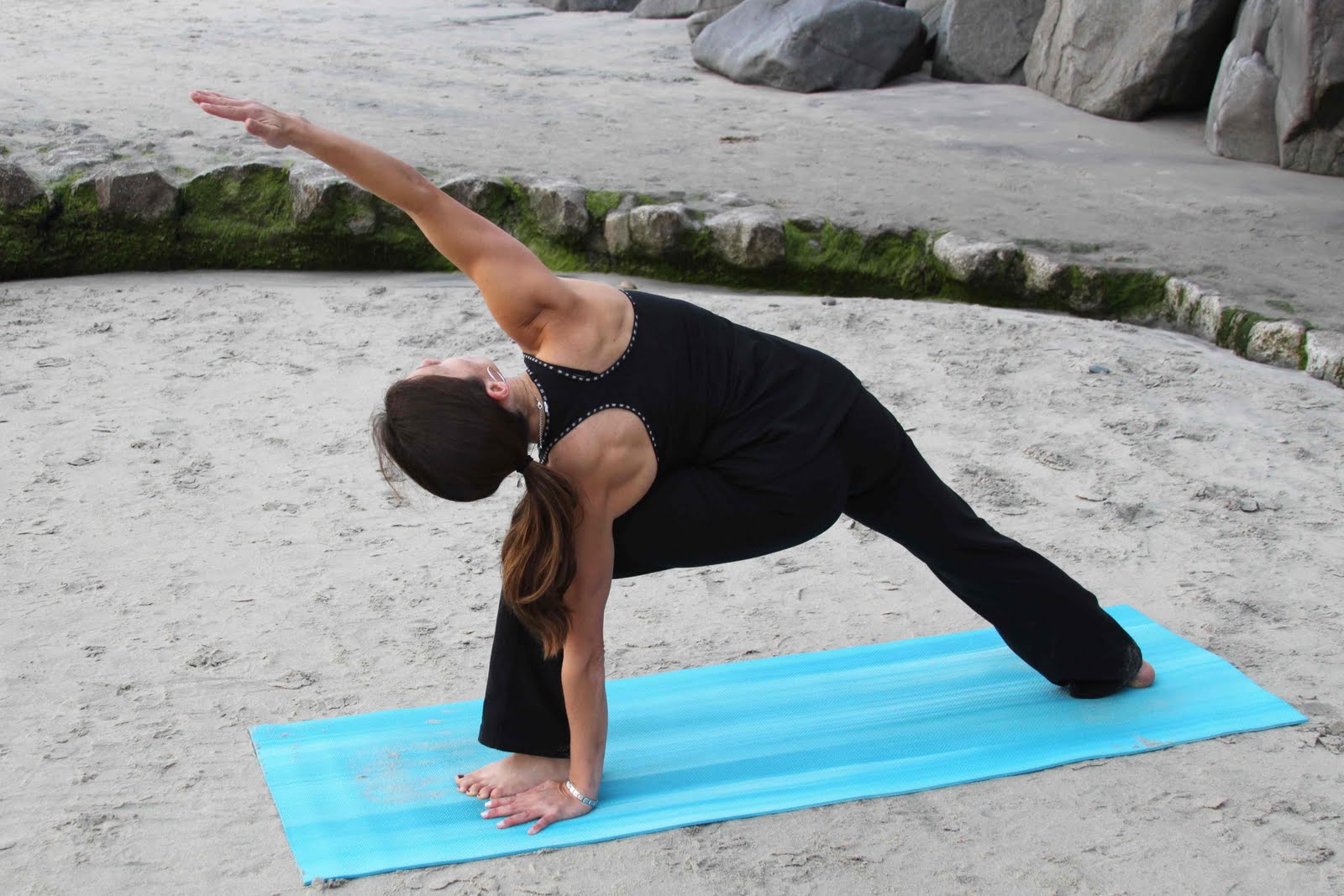
Prasarita Padottanasana D - 
I love this stretch - it opens my hamstrings, inner thighs, calves, and stretches my lower back.

5 simple ways to keeping your body feeling young:
1. REST  - be sure to give your body a break 1-2 days per week.  After an extreme & intense event, you may have to take days or weeks off.

2. NUTRITION - performance is 100% training and 100% diet.  When the body is under extreme stress, it is possible to weaken the digestive organs decreasing the amount of nutrients it can absorb. You may need to take a supplement.  Also, notice how much protein and fat you are eating and the macro-nutrients in your diet.   Taking fish oil or Omega can help reduce inflammation in the joints.  Your nutrition is your medicine.

3. BODY WORK  - have a trusted massage therapist, acupuncturist, and/or chiropractor that can keep your body tuned up like a machine.  Runners and riders will often have tight hips and hamstrings while swimmers and surfers will have tight shoulders and back muscles.    

4. WARM-UP - Take time to stretch and warm-up.  A proper warm up properly can help with performance and studies have shown that a proper warm up can also decrease DOMS (delayed onset of muscle soreness).  Integrate a yoga practice into your routine.  

5.  CROSS TRAIN  - complement your passion with variety.  Try biking, running, swimming, tennis.  Constant repetitive movement can wear down joints making you more susceptible to injury.   Strength training and core work is a great foundation for any sport.

Off to yoga for some recouping after an intense mountain bike ride yesterday.

Stay young :)
Chi

Thursday, October 11, 2012

Pre-workout meal - Mac on your macronutrients!

I wake up at 6 am to eat a piece of toast with almond butter with some coffee before heading to my 7am Ashtanga yoga class.  I eat an egg and avocado burrito as I drive to meet my friends for a long mountain bike ride about 2-hours away.  I chomp on a banana as I prepare for a fitness class.  What to eat before a workout is like asking what do you pack before a vacation...you have to consider where you're going, how long, is it cold/hot etc?    

The benefits of having a pre-exercise meal are tried and true - it feeds the brain and fuels the muscles delaying fatigue and improving performance.   It well known that protein and carbohydrates (1:3 ratio) are important for post-exercise recovery but evidence suggests a protein & carbohydrate snack before your workout improves amino acid uptake in the muscles and can improve performance.  
"Protein intake can influence gains in muscle size, facilitate muscle damage repair, and enhance muscle conditioning for both resistance and endurance training".  

Craig, Binh, and I taking a short break during a long ride.
WHAT TO EAT BEFORE YOUR NEXT WORK
Here's a rough template that you will need to tailor to your own gastrointestinal temperament. 

  • start 1-2 hours before your workout
  • carbohydrate-based 
  • low fat; moderate protein (approx. 10-20 grams depending on your weight and protein needs)
  • extra fluids with electrolytes
  • Protein bars and shakes are a good alternative if you don't have a lot of time but want to be consistent.   

** don't have a lot of time before your workout?  Have a small amount of complex carbohydrate like banana, potato (not potato chips!), fruit cup, apple sauce.  
** expect to have a long run or ride? add some natural fat to your meal (e.g. avocado, nuts)

FAVORITE PRE-EXERCISE MEALS:

  1. greek yogurt with fresh fruit (berries, bananas)
  2. egg burrito with avo for 4+ hour bike rides
  3. snack on almonds with dried fruit about an hour before a class
  4. oatmeal packets are a life saver...easy to make, easy to digest, sustained energy
  5. toast with almond butter with slices of bananas.  frozen waffles work too.
  6. peach cup 
  7. coffee!!!  but be sure to go use the bathroom before your run..just saying.
  8. coconut water

Time to go shopping and stock up on your favorite foods!

Train hard, train smart
Chi


REFERENCE:
Nutrition and Exercise with Nancy Clark, M.S., R.D. C.S.S.D, sports dietitian and William Evens

Strategic Protein Intake for Enhanced Athleteic Performance, Lindsey Ormond

Monday, June 11, 2012

Training for Whitney - food, shoes, altitude, poles..

I am going to take a break from the Stagecoach 400 for two reasons...one - i need to come up with a better way to describe the cast of characters.  each person had such a different background, experience, expectation that i can't oversimplify their story.  second - I am in the beginning of training two groups to summit Mt Whitney in a day and there are mounds of information I want to share while its fresh on my fingertips..and i have my dirty shoes and pack next to my leg.


Goal: Summit Mt. Whitney in one-day
Experience: various levels ranging from Whitney veterans to some who are afraid of heights.  We have men & women who are in excellent fitness level and some who want to use this to help with their fitness level.
Strategy: two training hikes per week for four months; each hike increase either duration, distance, elevation gain, elevation or a combination of two to expose their bodies to the elements they will see at Mt. Whitney including steep climbs, steep ascents, altitude, and hikes.

Checklist of what to carry on each training hike:
1. hydration pack that holds 3 liters
2. water bottle to carry for electrolytes
3. sun protection - hat, glasses, sunscreen, chap stick
4. cold weather - beanie, gloves, windbreaker
5. first aid kit - ibuprofen, blister kit
6. camera/phone
7. hiking poles
8. electrolytes - nuuns, coconut water (see #2 above)
9. yummy food - salty, sweet, fat, protein, sugar.  examples: fresh fruit - banana, orange, grapes, mango, fruit cups, tuna pouch/crackers, PB&J or AB&J, turkey and cheese sandwiches, chips, almonds, olives, leftovers, pretzels, trail mix.  I bring extra bars as back up since they take up little space and well packaged.

enjoy the journey,
chi


Tuesday, January 17, 2012

Be Nimble, Be Quick - 5 Tips to Improve Your Speed

Taken by Dan McCormick
Race season is around the corner...my nutrition is getting a make over, I am increasing the intensity of longer rides, and watching my sleep hours (need to cut back on my beer intake too).  Plain and simple - I love racing and I love training for my races.   I get excited, nervous, pumped, motivated, and overjoyed!!!  Boooyaaaa!!!  I race because it is fun, pushes my limits, and makes me faster!


Racing is not the only way to get faster.  Many of my clients, runners and bikers, are looking to PR their next race.  They want to push their mental and physical limits and see what boundaries they can break.  Below are some insights into revamping YOUR training to be a better and faster rider or runner.


1. Lose your Muffin Top or Keg Belly
trim down and watch your sugar and alcohol intake.  In a week or two you will start to feel a big difference.  Dropping 5 pounds make you faster and your power is not lost in extra weight.  People spend hundreds of dollars getting their bike lighter when they can lose that weight in their waistline.


2. Strength Train
this is my favorite topic because it is simple and yet so many people think since they use their legs they don't have to train their legs.  That is exactly why you do have to train your legs.  Runners and bikers want to stay light and lean so using your own body weight is perfect.  think simple - pushups, pullups, lunges, squats.  Add core exercises such as plank, twists, and crunches.  Finally, round up your routine by challenging your balance - strengthen your ankles, hips, and shoulders.  If you are starting your race season or that half marathon is around the corner, wait for a break in your training schedule to add these exercises.  


3. Gear up!
Take a look at what you are riding or running in.  If you haven't replaced your running shoes in 6 months or your bike has seen better days, consider investing in new gear.  As an endurance athlete,  you spend hours and hours training and your bike/shoes should be able to handle this wear; keep your gear working at its best so you can keep moving at your best.  Take care of your gear - keep it clean and dry.  New tires can help your turns, better socks can make your feet feel comfy for hours, look into new nifty breaks...don't settle with what you got with your initial purchase.


4. Nutrition is Key
Taken by Dan McCormick
Be ready for your ride/run hours before you need to.  Consider your intensity, duration, and the natural elements (heat, humidity, dry, cold) and adjust your calories and nutrients accordingly. Hydrate not just hours before your race/run/ride, but start days before.  Practice with what you put in your body and see how you feel; maybe you have trouble carrying the bottle or gu.    I learned during my long (4+ hour) rides, that electrolyte pills were more effective than Nuuns, although I love the way Nuuns taste and feel in my body.  It just wasn't cutting it for my needs.
5.  Challenge Yourself
Ride with better riders.  Ride in new places.  Sign up for a race for the fun of it.  Taking mountain bike road trips with friends is one of the funnest ways to get your groove on and test your speed and bike skills.  Riding with faster people makes you pace yourself harder and see how fast your legs can go.  My new challenge is the Strava App that lets me compare segments of my favorite rides with other riders.    It is a simple tool; just hit start and it does the rest.   The addiction factor is high on this tool so be forewarned.


Jack be nimble, jack be quick, jack jumped on his mountain bike.


Train hard, train smart
Chi

Tuesday, July 19, 2011

Will Race For Beer

Racing has a unique way of defining you as an athlete and as a person. I wasn't always sucha strong competitor but after completing my first mountain bike racing season as Expert, I look back at how much racing has molded me into the athlete and person I want to become. It is an arena to become a better rider – nimble and light on the descents, strong and steady on the climbs, and smart on the nutrition. I won’t race forever: one day I will fill my calendar with my own picks & favorite trails rather than US Cup # (enter a number); but while the fire is burning and the passion is there, I will race and race hard.


Be careful with overtraining!
I was getting faster with every ride; so I rode more, hoping to get faster. Only to find that I was sick and my energy was severely dampened. Manage your energy and stop while you’re ahead. You know you’re overtraining when you ride and your legs hurt after your warm-up. They should feel fresh and your breathing smooth.


Ditch the camelback!
The camelback was like my blankie and it had everything I thought I needed. But when it came to racing, it's about being lite. What I REALLY needed on a 15-25 mile ride was a tube, CO2, a gu and a bottle of water. The only other time I used my camelback was during Downieville when I needed both hands on the bars during the descents. Although, there were a few moments I could have drank from a bottle…note taken for next year.


Stay focused!
There were obstacles that could have slowed me down or made me think I couldn’t ride hard. There are obstacles IN LIFE that make you question your ideas, your abilities, and your values. Believe in yourself. Staying focused on the task (call it a race, a goal, your life) is challenging because distractions and doubt can steal your vision. Nuture your goals and recommit your focus -- this focus is powerful. Whether it is a break up, worse day of my period, and an upset stomach (all on the same day), you still have to race. What are you going to do about it? What does it take to break you? Excuses give you an easy out; but challenges can make you find a stronger side that is waiting to be exposed. Once the race starts and you got your groove, fatigue seeps into your muscles and your head and start a downward spiral. Keep your focus! Breathe… when you can hone your focus, you transport to a kind of surreal, dream-like feeling. When I race, I tell myself “Winners don’t whine” or “soon you’ll be sitting with a cold beer and won’t feel any of the pain” . When all else fails, PEDAL, PEDAL, PEDAL!


What’s a kit?!
Team leader, Derek Harmon, brought me a kit the day before the first race at Sagebrush. I’m thinking “what the heck is a kit?”. Soon I realized that your racing outfit is your kit - dah! I was reluctant to wear the tight shorts (XS? REALLY?!) but after racing in ‘my kit’ I realized that they do the job of keeping clothing out of your way. I acquired a new Lazer helmet that is feather-weight and super cool glasses that have changeable lenses.


The power of protein, electrolytes, and water!
How, when, and what you feed yourself 24/7 is essential to training and racing. The closer you pay attention to your hydration, protein, and veggies, the more power you get. I added a shake in the morning that has 20 grams of protein and shit-load of fruit, added some lean steak on my salad, ate more fish, took omega-3 oils, added super green powder to my drinks/smoothies. Alcohol intake subsided and was substituted for water. Stopped my Wednesday night ice cream treats and substituted plain greek yogurt with fresh fruit. Started using
Hammer’s Recoverlite after my hard rides. On average, I drank 4 liters of water a day. I ate and drank to ride and then I ate and drank to recover.


Train hard, train smart!
Every workout, no matter how good or bad I might have felt, was like a deposit into the ‘race hard fund’. But on those rides where I was committed to the training, I made huge gains. I started to tailor my workouts depending on the race coming up – short and fast, long hills, technical descents. I added more pushups and pull-ups for Downieville and long hill repeats for Big Bear race. Ahhh…and then there’s yoga like a dear, loyal friend. My yoga practice has improved my upper body and core strength with arm balancing poses. Yoga is about non-attachment and not worrying about how good you look, it’s about your breath and how you feel and being absolutely present. My mind would wander and I would bring it back to the present. This training, helped me keep my focus during my riding….one breath at a time.


Next year...
more strength training – core for balance and strength, stronger legs for the climbs, stronger upper body for the descents. Adding road biking to the training schedule in the off-season. My own floor pump – hand pump and CO2s aren’t cutting it. Finally, arm and leg warmers would be nice.


I must give proper credit to – Derek of Bear Valley Bikes who helped me ditch the camelback, reassured me before major races, helped me with the fancy helmet and gear, and with race day logistics. My riding buddies (Craig & Binh - pictured left) for showing me the lines and keeping it real. My buddies (Orange & Gimpy) at work for kicking my ass. Super K for reinforcing all that I read about mental training and how key it is to having a successful race. My family who made sure I came home safe after every race.


Every time I get on my bike, it is a treat. I get a unique opportunity to encounter the world around me in a language I understand. It cures my concerns, shows me solutions, retraces the beautiful gifts I have in life, and makes me feel so grateful. At the end of the day, a race is a race; take the good and the bad and learn. Have fun along the way.


Now...how about that cold beer?

Chi

Tuesday, April 12, 2011

Eat your Wheaties...nutrition and performance

After an extreme weekend of riding or racing, I like to see all the data from my fancy Polar watch and check out how many calories I used up. During a 2-3 hour ride, I can easily burn 1000-2000 calories (the equivalent of a large meal at In-and-Out). And this is on top of the 1500+ calories I SHOULD be eating. I'm not a big person, many of you probably burn 50-100% more than that!! But we extreme athletes & adventureous souls can be a bit lazy about our calories...often not taking enough calories in; and when we do, we don't always put the right things in our bodies. We reach for that super drink, super bar, or super-sized (enter your guilty pleasure here).

According to Sara Grout, nutritionist who specializes in functional nutrition and metabolic typing, an athlete's nutritional requirements are critical not only to their performance but also in their longevity and to the prevention of burnout and injury. The body is constantly under stress -- and if it isn't receiving proper nutrients, the body starts to leach them from its stores. The chance of burnout and injury increase (some joint problems could be related to poor nutrition) while your performance suffers (legs feel tired, not enough power, reoccuring illness). This is the most interesting information that Sara shared in a recent interview about nutrition and performance of the endurance/extreme athlete: the constant stress from exercise itself and the recovery process can cause the digestive lining to weaken. This makes it hard for the body to properly use the food and absorb the nutrients. Result - you might be eating the right foods but still lacking nutrients.


Checklist for your frig & pantry - Take a look at your diet. The right formula on what you should eat is as individual as your training. Each person requires an optimal palette of foods based on unique physical demands. In light of keeping a complicated topic simple, this checklist will help guide you to fine tune your current habits and help you stay in the game.


  • PROTEIN and FATS are your best friends! include both of these in every meal and snack. especially when it comes to fats, athletes need good fats. low fat is not better.


  • JUST SAY NO TO BARS... instead reach for whole foods for your pre-workout and post-workout meal. examples include: banana, homemade protein bars with nuts and honey, baked sweet potato.


  • RAW Vs. COOKED veggies - raw isn't always better. the body is able to absorb nutrients better from cooked veggies


  • SEA SALT- it is the major electrolyte that will help with fatigue and balances the other electrolytes. If cramping is any issue, Sara recommends magnesium/calcium but be sure that you are well hydrated and getting enough sea salt. note that i didn't just write salt; sea salt has the compounds most similar to those you lose in your sweat.


  • HUNGRY? eat more fat and protein

Enjoy your meal...you earn it! Chi

Wednesday, January 12, 2011

Muscle Cramping - Sweat & Tears

As a trainer, fitness related questions or concerns happen in 3's. I may have three clients with lower back pain or three clients with knee 'discomfort'. When these 3's come up, I research the issue for cause, remedy, and prevention.

In the last few days, muscle cramps has been a recent concern. Take riding friend Louis for example - a fit & healthy guy with a passionate attitude toward any sport. In a five-hour ride in Lake Morena over the weekend, he suffered so much muscle cramping that I started to call him PMS. And David (adventure racing teammate in Desert Wind Expedition Race in Mojave Desert) had several days of muscle cramping during the race that left him, not just frozen, but aching in pain. Once cramping comes on, getting rid of it is a challenge in itself - the spinal cord keeps sending signals to contract. The solution - prevention.

Cause
There are several reasons you can cramp - dehydration, lack of electrolytes, exposure to extreme heat or humidity, and overexertion. In other cases, you may be on medication that depletes the body of certain important electrolytes; and in that case,you need to talk to your physician.

The muscles are full of water and electrolytes and together they help bring nutrients to the muscles allowing them to contract while removing waste. When you get depleted of water or nutrients, the body is not able to work as effectively. I'm not one to throw age as a performance concern, but as you get older the muscles lose their ability to function. Only you know really which factor is inhibiting you the most.
Prevention
1. HYDRATE - not just during your activity but throughout the day or days leading up to your event. The body is made up of 60% water and loss of water through exercise can effect the way your muscles contract and remove waste products.
2. LYTES - sodium is a critical electrolyte. Other important electrolytes are potassium, calcium, and magnesium. When you lose water through sweating, you want to be sure you replace not just the water but the electrolytes lost with your sweat (especially salt). The guidelines recommend 500-700 mg of sodium for every liter you consume during exercise which exceeds an hour. Don't just reach for that banana - be sure to have a healthy diet full of different fruits, vegetables, and whole foods.
3. TRAINING - follow an exercise plan that is progressive and training the muscles you use. sounds simple enough but many of you play different sports. You may be going on a three-day vacation to Mammoth; be sure to prepare your legs, calves, back, core for the snowboarding or skiing for you'll be doing several hours a day. Besides preparing your body, prepare your digestive system with an electrolytes replacement of choice. Nuun are a favorite in the adventure racing world.
4. FORM - when you're doing a repetitive motion, those muscles fatigue and get overworked. analyze the motion and evaluate if you are moving as efficiently as possible.
5. HEAT/HUMIDITY - this one is tough because it is hard to overcome conditions that you aren't accustomed to. In situations where you are overexerting yourself due to heat or humidity, be cautious of your exertion levels and chill out a bit. Taking electrolyte tables are effective. I learned this lesson during the 5-day expedition race over the summer - "electrolytes on the hour, every hour of the race" racing friend Paul Romero.
(Teammate, David, tying the rope after our final leg of a 1500 foot repel section. It was over 100 degrees and we had been up for over 24 hours. We still had three days to go.)
Train hard, train smart!
Chi-lyte

Saturday, September 11, 2010

Your Pack - one day trip


The three month training for Mt. Whitney successfully ended last week as 8 of 9 summited the 14,500 peak on September 4th. It was a fun trip for everyone and with lasting memories.


It is now that time to unpack gear and put things away. The pack is your life line to make the journey safe, fun, and tasty!! After wearing it for so many hikes, I knew exactly where each nibble, lube, band-aid would be. That is a good sign of a loyal pack.


Here are some items I carried in my pack and on my own body for the 16-hour (22 mile) hike from Whitney Portal to Whitney Summit. My pack weighed in at 16 lbs. Other packs varied from 10-30 lbs!!!


1. Daystar Camelback 70 oz pack - link to item

2. 1.5 liters of water (in bladder)

3. bike bottle for electrolytes

4. walkie-talkie

5. food (the most important item): fresh fruit (grapes, apples, blueberries), powerbar energy blasts, half-submarine sandwich for the peak (super tasty), pita chips, chocolate covered pretzels, prosciutto, Joe-Joe's cookies from Trader Joes, power bar, MoJo bar

6. first aid kit/soft splint (i was a bit paranoid)/hand sanitizer/emergency blanket

7. hat/gloves

8. sunscreen SPF 100

9. windbreaker

10. blister defense (never had to use it thankfully)

11. bug repellent

12. headlamp (with extra batteries)

13. pen/paper

14. map

15. camera/cell phone

16. water purifier - should have used it more often. one can expect to drink 3-5 liters of water when climbing mt. whitney in a day. i was think i can get away with 2 liters but i always run out.

17. how can i forget.... 2 WAG bags! oh the shame!

18. TP & baby wipes

19. permit


on my body (besides clothes)

1. lipbalm with SPF

2. ipod shuffle

3. HR monitor (had during hikes - average heart rate was 100-120 bpm)


Train hard! Train Smart!

Thursday, August 19, 2010

nutrition project - Isagenix (Final - week 3)

The final week on Isagenix was by far the easiest. I got used to drinking a lot more water, gravitated toward fruits and vegetables, craved the green 'yucky' juice, and my mind was very clear. Though I was not looking to lose weight, I lost two pounds and my muscles got more defined. There was a day during a training hike (in preparation for Mt. Whitney) that I got a terrible headache from the very start that ended with me running out of the car to puke. Not sure what happened - I can only conclude that I wasn't getting enough calories and my body just shut down.

Though I'm now not officially on The Cleanse, I still do the morning shake (it tastes good and gives me a ton a protein and two servings of fruit) and the greens. I am drinking more water these days and drinking less alcohol simply by choice. Actually dumped the rest of my wine tonight...just didn't taste the same.

I wanted to see how it would affect my performance and minus the stint on the hike, my performance is solid. My running is faster and the classes I teach are more intense.

Next steps.. research a maintenance phase to continue to add B12, protein, and all the super greens. They have an athletes pack that has many of these items.

All in all, I am pleased with how I feel and my mind feels very calm and clear.

Steady mind, strong body! Train smart
Cynthia

Thursday, August 5, 2010

nutrition project - Isagenix (week 2)

I'm wrapping up my second week. After two weeks of a multitude of different nutrients, i must say that I feel wonderful! Here is what the 30-day plan consist of: twice a day protein shake, shot of 'superfood' in the morning/night, Isoflush at night (you can only imagine), and lots of water. The plan is to eat one 'sensible' meal a day but because of my concern to maintain weight, I eat two meals a day in addition to the shakes (and I really like the shakes). The last day of each week is a Cleanse Day where you drink 'Cleanse For Life' concoction four times a day and drink lots of water. Here are some highlights of the last two weeks:

Moods - stable and I feel grateful and peaceful.
Cravings - for awhile I wasn't craving coffee but I can't resist the morning cup of joe. But I don't drink the same amount and I can't do a double espresso anymore. I have so much energy that having too much coffee makes me act like a crazy chipmunk! I do have my beer/wine at night; but like the coffee, don't go for the second one.
Energy - wonderful!

two crazy/weird side affects that i wasn't expecting -
1. complexion - my skin totally broke out after a week like i was a high-school kid. It was so embarrassing. But I held tight and after two weeks, it is totally clearing up.
2. 'that time of the month' - about a week before my period, I get shortness of breath which is an indication of my iron levels dropping. Didn't even phase me this time. I had super mild cramping but that was the extent of my 'PMS'.

More on Cleanse Day next time. It is an interesting experience. So far, I'm very pleased with how I feel.

Drink Water!
Cynthia

Sunday, July 25, 2010

nutrition project - Isagenix (week 1)


As a trainer, I often get clients who follow the guidelines with exercise and nutrition to a tee and still are unable to lower weight or body fat. It totally stumps me. For some, I think they may have other health issues that need to be diagnosed by a doctor (e.g. thyroid); but for others that are otherwise in great health, it can be frustrating.

I discovered Isagenix that is first and foremost a cleanse but helps people with weight loss and improves a person's health & performance. I am always the first skeptic when these claims are announced, but it came from a respectable source and the results couldn't be discounted. It really changed how people felt and people lost weight.

so, to get to the point, I purchased the product and will use it on myself for the next 30-days. I never have my clients try anything I haven't (or wouldn't) do myself or trust. I am keeping a log of my body composition as well as sleep, moods, energy, cravings, and mental clarity. My goal: is to see how I feel and how it affects my energy, recovery, and performance. My concern: i don't want to lose weight so I will need to keep my caloric intake higher than is recommended.

I am currently in my third day and I truly can't believe how energetic i feel. My mood is calm and happy. yesterday i woke up at 4:30 am, hiked 15 miles (4000 feet), changed and went to my friends house in idyllwild to acclimatize. woke up sunday and did a 15 miles cross-country race (at 5000 feet elevation) and kicked my own ass but had a blast. When I came home and I did chores for 4 hours. I'm not wiped out, not cranky. it is crazy!!!

keep cranking forward!
chi